
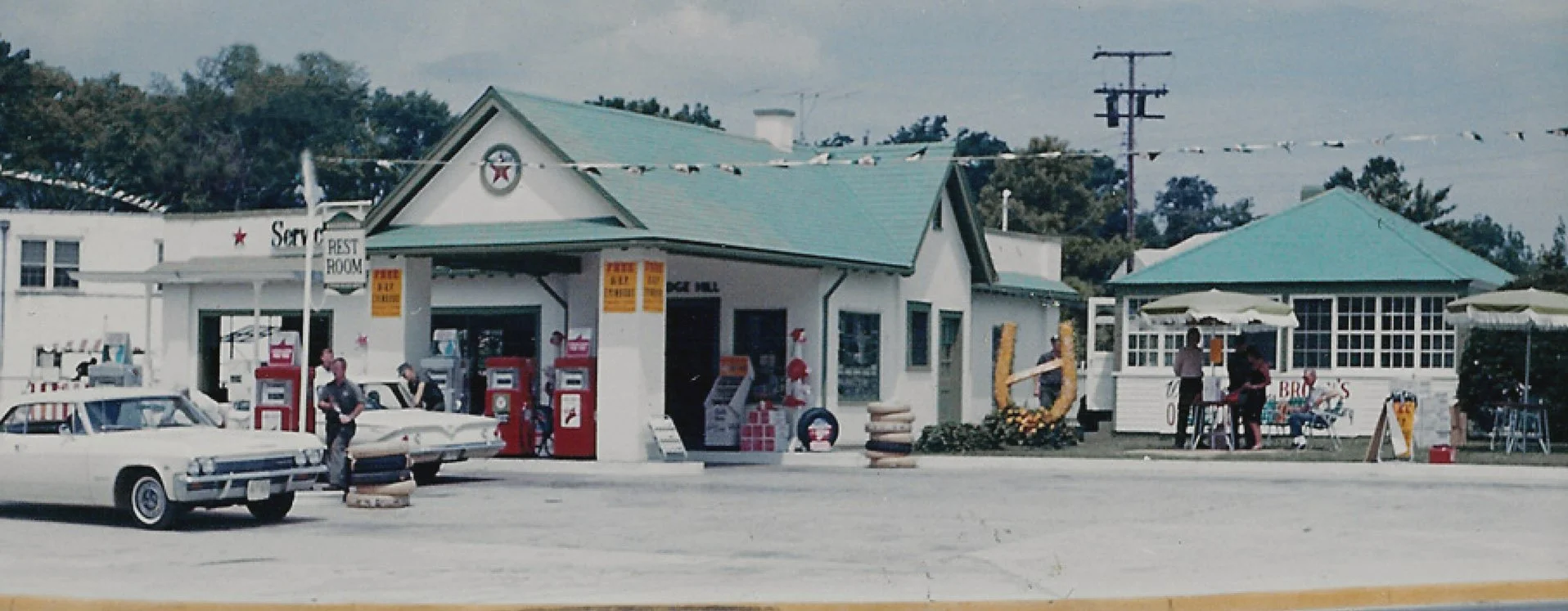
Edge Hill Texaco Service Station, Gloucester
Virginia USA
2010 - 2018
Glasshouse preparation
Building History & Context
Edge Hill Texaco Service Station
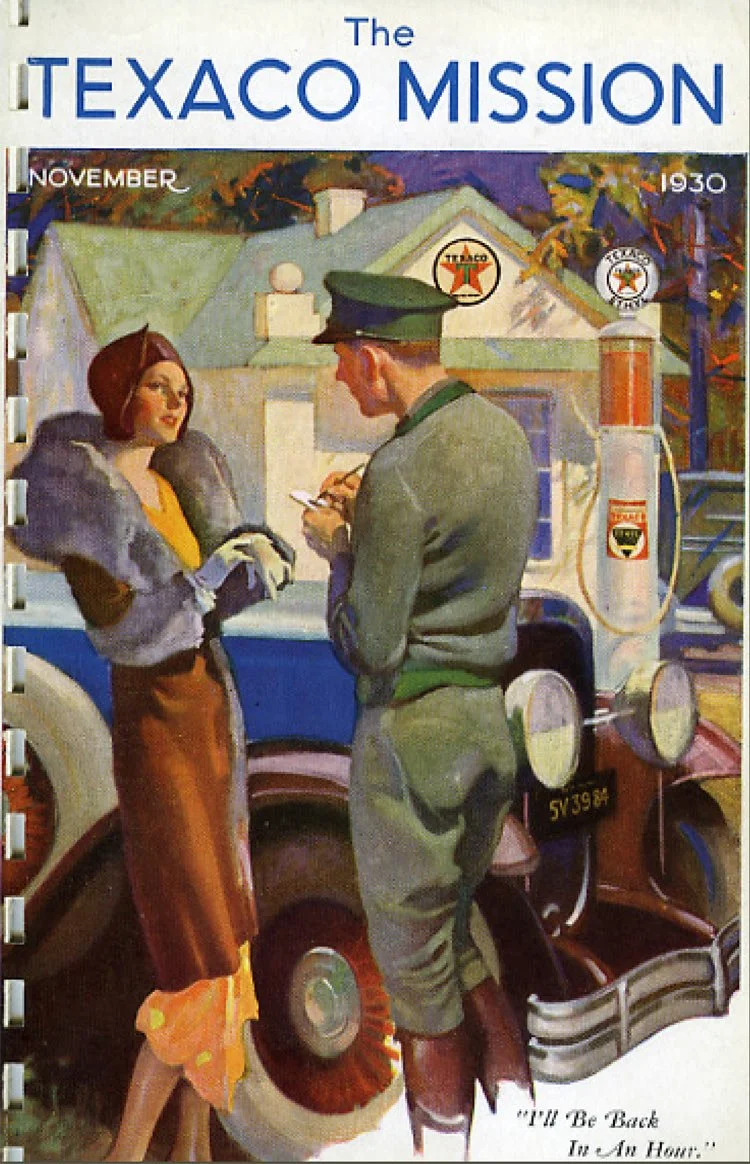
During the 1930s, Texaco transformed from a regional oil enterprise into a nationwide roadside icon. Shaped by the Great Depression and the explosive growth of American car culture, Texaco gas stations pioneered modern station architecture, full-service hospitality, and legendary branding. Renowned industrial designer Walter Dorwin Teague created a modern corporate look featuring an all-white porcelain-enamel building with clean green striping, large plate-glass windows, and integrated service bays. Approximately 10,000 of these streamlined stations were eventually built across the United States, making Texaco instantly recognizable to travelers.
Edge Hill Texaco Service Station was built in Gloucester, Virginia, in 1930 and served the local community for over fifty years. Its location was not only central to Gloucester but also to the Colonial Parkway, a well-traveled tourism route, making Edge Hill a visual landmark. By 2010, more than 19,000 commuters and tourists passed this corner every day.
Project Goals and Outcomes
210 HOURS OF VOLUNTEER LABOR!
In 2010, The Fairfield Foundation, a local Gloucester nonprofit focused on archaeology, purchased the iconic Texaco station to save it from demolition. They embarked on a dream to transform this 1930s gas station into a regional center for archaeology, preservation, and education. Their vision was to preserve Edge Hill and design interior spaces to serve as their headquarters and a community center that would engage the public. The accurate preservation of the building was key to the project’s success. The total project budget was set at $1.3 million.
The Fairfield Foundation reached out to Adventures in Preservation (AiP) for assistance, asking AiP to apply its very successful methodology to help save Edge Hill. AiP specializes in setting up projects that bring volunteers to learn hands-on preservation skills, which they then use to complete the conservation of an endangered historic building. Project partners provide tools and materials, and labor is free of charge. This process supports AiP’s vision of a world where people use, understand, and appreciate historic buildings that remain vital to economic and environmental sustainability and preserve cultural identity.
Hands-on Work and Results
Adventures in Preservation’s first hands-on volunteer vacation with The Fairfield Foundation—the first of many—was held in May 2011. The project was possible due to incredible support in the form of donations, materials, and labor from the local community. Seven volunteer participants from across the US focused on the repair and re-glazing of original iron-framed windows. Thane Harpole and Dave Brown, co-founders of The Fairfield Foundation, provided instruction and guidance. The team contributed 210 hours of free labor and successfully completed conservation of all historic windows. Much of the glass was broken and was replaced by new, more energy-efficient panes. One original pane, however, was left in place as an example of the building’s original glazing material.
AiP’s second hands-on session, a one-week plaster workshop, was held in September 2012. This session owed much of its success to a generous donation of plaster supplies from Master of Plaster Finishing Systems, Inc. The goal was to repair damaged plaster on the interior station walls. Under the tutelage of Gus Rhodes (GSR Drywall), a crew of six volunteers made plaster repairs in four of the station’s rooms.
This inspiring week became a catalyst for other points of progress carried out by motivated community members. Key items included repair of the garage door tracks and preservation of the original east garage door by local joiners. The joiners also created a replacement door for the west garage bay that looks like a garage door but functions as a conventional door, providing more secure and efficient access. Volunteers also restored the station’s original light fixtures and fashioned custom-built window hardware to replace missing elements.
Architectural elements, such as window frames and original lighting fixtures, were saved, repaired, and reinstalled. As the building was cleaned out in preparation for its transition to the headquarters of The Fairfield Foundation, the keyword was recycle. Metal ductwork, worn metal lath, the fuse box, fluorescent light fixtures, display shelves from the 1990s, and metal conduit from throughout the building avoided the landfill and went straight to the recycling center. Volunteers moved donated exhibit cases, scrap lumber, bread racks (great for artifact drying shelves), and an old depth gauge for the long-gone underground gas tanks into Fairfield Foundation’s storage shed. They flagged and saved all brackets, eye hooks, and early metal light fixtures in the ceiling, which were carefully conserved and put back in place.
Dave Brown stated, “We saved everything we could—even the kitchen sink (two actually). All of this recycling will benefit our application for LEED Certification and is just plain old good sense!”
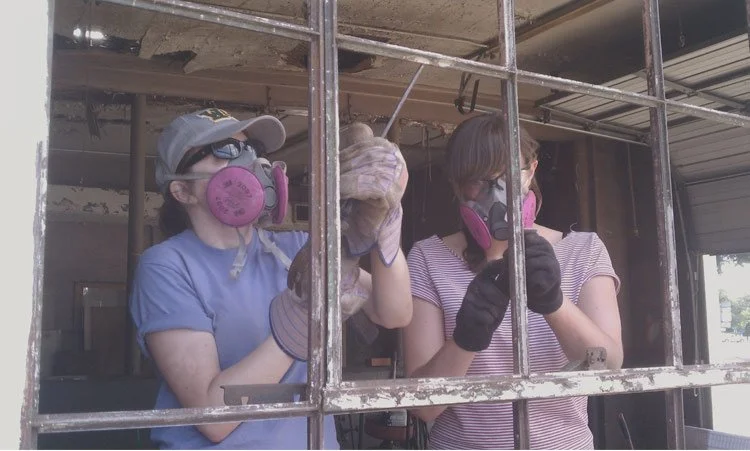
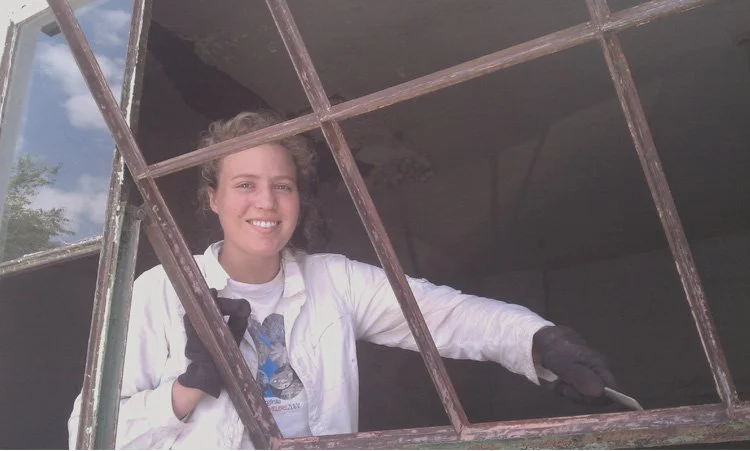
Repairing iron framed windows
Vision
Fun and Feedback
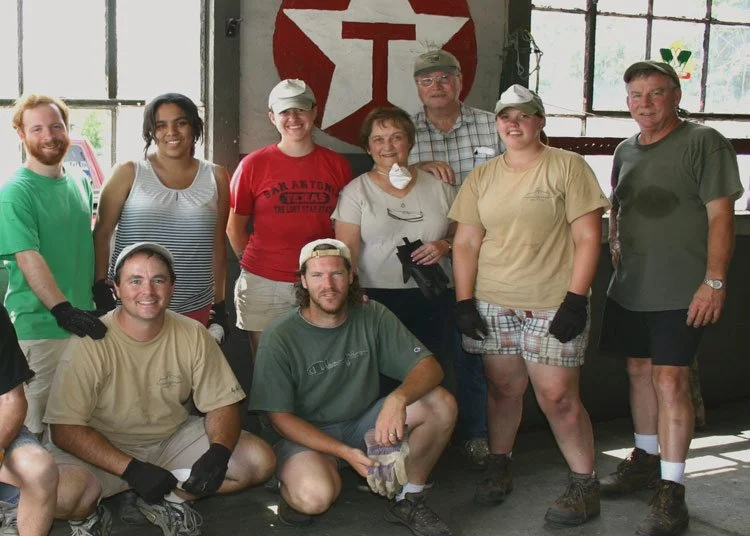
Burgie group
As with all AiP projects, workdays were enriched by excursions to experience the beauty and history of Gloucester and the surrounding area. Excursions included a guided tour of Gloucester’s historic Main Street, a tour of the Rosewell Plantation Ruins, and a behind-the-scenes tour of Colonial Williamsburg. The team also heard a lecture on LEED standards for historic buildings, participated in Tuesday archaeology night—washing artifacts with local volunteers—and were hosted for a cookout and swim.
“I don’t think I have worked that hard and felt so good in a long while.”
—Janet Brown
“Our project gave the clear impression of changing history while saving it. The project was the result of great teachers and very good staffing and planning.”
—Caitlin