
Burgie Estate, Moray, Scotland
June 2017 - October 2019
Glasshouse preparation
Building History & Context
Returning an Edwardian Greenhouse to Grandeur
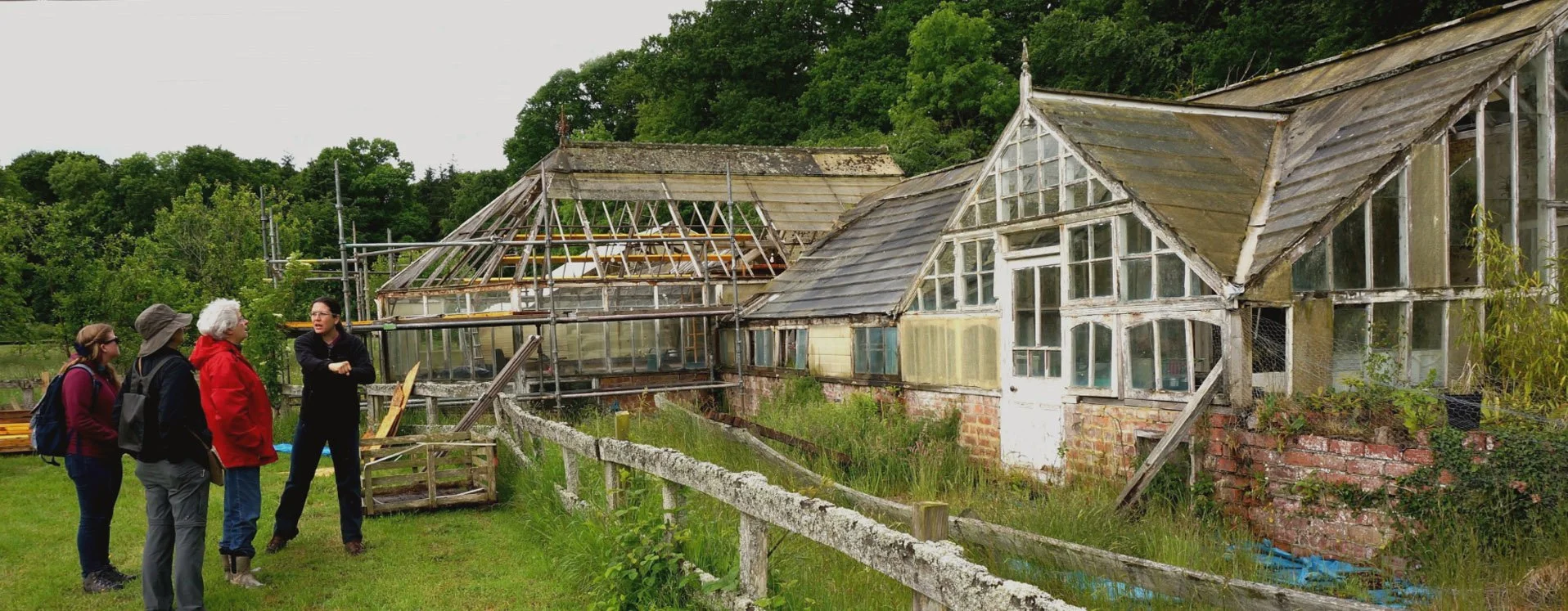
Burgie glasshouse, or greenhouse, was originally built in 1912 and belonged to a world that no longer exists. If you look closely, remnants of a grand past, that provided flowers and greenery for the manor, can be found. The social structures of Edwardian Britain eroded after the First World War, and the rural economy and lifestyle changed forever, leading to the demise of the glasshouse.
The central greenhouse was built largely of wood with a low brick wall under the windows and a system of metal louvers to open and close windows. The sections extending from the central greenhouse to the east and west have lower walls of brick under the windows. The more decorative east room has an additional room attached to the back, which was built of brick. An area under the greenhouse housed mechanical systems that provided heat to the building. This was removed around 2015.
The large central glasshouse, and most likely the east wing, was built by James Walker – Hothouse Builder – Aberdeen. The metal louver mechanisms have cast lettering, saying Tucker – Tottenham. Duncan Tucker & Sons Ltd, often referred to as Duncan Tucker of Tottenham, was a highly prominent British manufacturer of horticultural buildings and glasshouses active during the late 19th and early 20th centuries. Glasshouse ventilation handles from this era were typically heavy, cast-iron levers. They were designed to operate continuous ridge or side-wall vents via horizontal torque rods, allowing gardeners to open large banks of heavy glass panes simultaneously with minimal manual effort. This was the type installed at Burgie.
No conservation work was undertaken prior to the AiP project in 2017. Before this, broken windows were covered with fiberglass panels that were nailed to the glasshouse frame.
Project Goals and Outcomes
931 HOURS OF VOLUNTEER LABOR!
Hamish Lochore, owner of the Burgie Estate, envisioned an 80-acre arboretum, where he could grow trees, both endangered Scottish species as well as exotic species from around the world.
He began putting his vision into action as he reached his 60s, developing a huge international network to provide him with seeds. At this point, the Burgie glasshouse became essential to foster the seedlings until they reached a size for planting in the arboretum. The purpose of the arboretum is to determine which trees will thrive in the area’s unique microclimate as the world’s climate rapidly changes.
The arboretum is open to all who wish to come and wander among the trees to understand Hamish’s vision.
Hands-on Work and Results
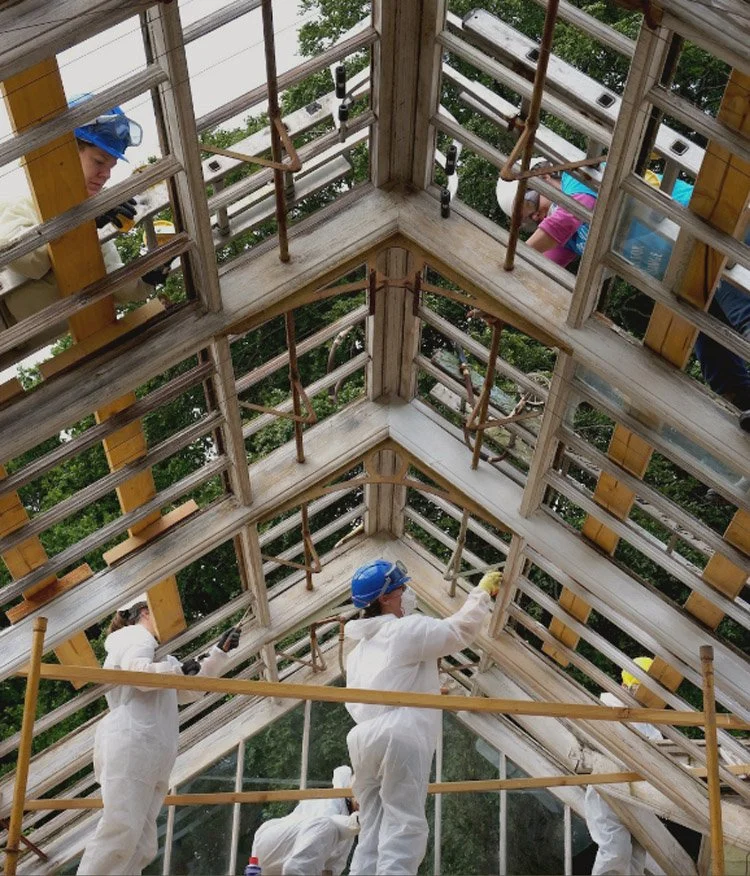
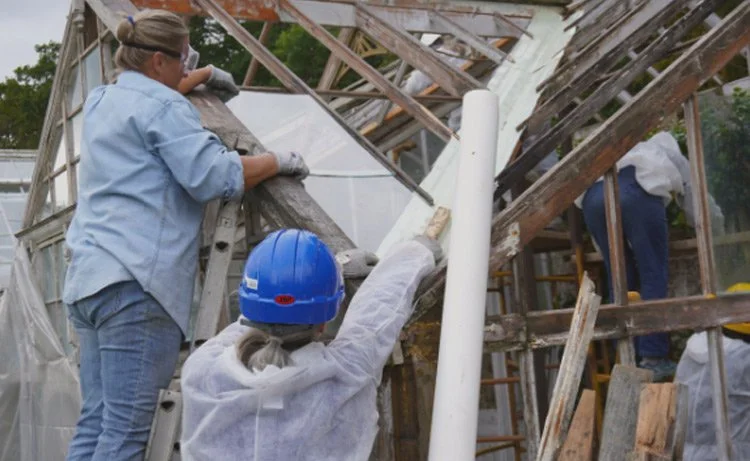
In June 2017, Adventures in Preservation brought fourteen volunteers, called Jammers, to join WWOOFers (agricultural volunteers) committed to the vision of an arboretum. Stephanie Weinraub, building conservator, completed research to design the work plan and led hands-on efforts. In just two weeks, the group took on the entire wooden framework of the central glasshouse, restoring the wood and preparing the structure for reglazing. The conservation process was the following:
1. Sand
2. Scrape off old putty
3. Wood hardener where needed
4. Wood filler to fill holes caused by decay
5. Linseed oil
6. Primer – 2 coats
7. Paint
The group was also able to begin the process of cutting new glass panes and putting them in place with lime putty. This was an amazing feat, accomplished through 595 hours of donated labor.
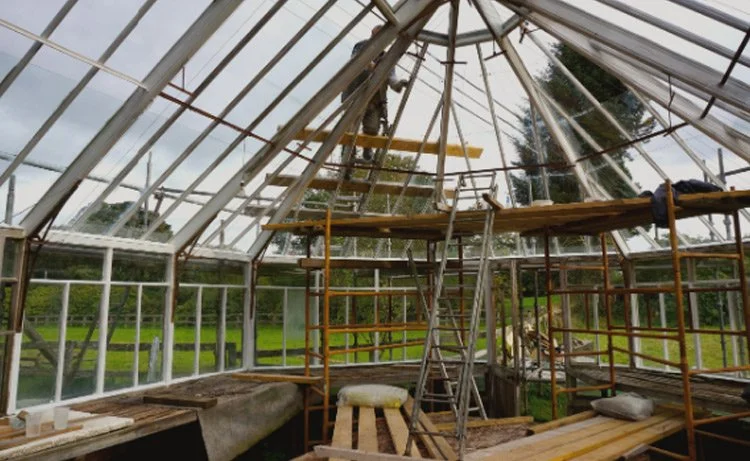
In September 2017, 6 new volunteers arrived – one a retired glazier - to take on the task of completing glazing of the central glasshouse. They accomplished the task, giving an additional 336 hours of labor. With unexpected help from a local roofer, and help from Hamish, over 250 pieces of glass were laid in place with linseed oil putty, about a third of them custom cut to fit irregular spaces. Remarkably, the two weeks were almost entirely free of rain, which only set in as we were cleaning up on the final Friday.
The historic East room was the focus of work for nine volunteers in September 2019, the wooden façade of this room having the most decorative features of the entire structure. Again, the roof needed to be reglazed. In two weeks, the wooden frame was repaired and repainted, new glass was cut, and re-glazing completed. 413 hours of donated labor resulted in complete conservation of the east room.
New glass in place
Placing glass
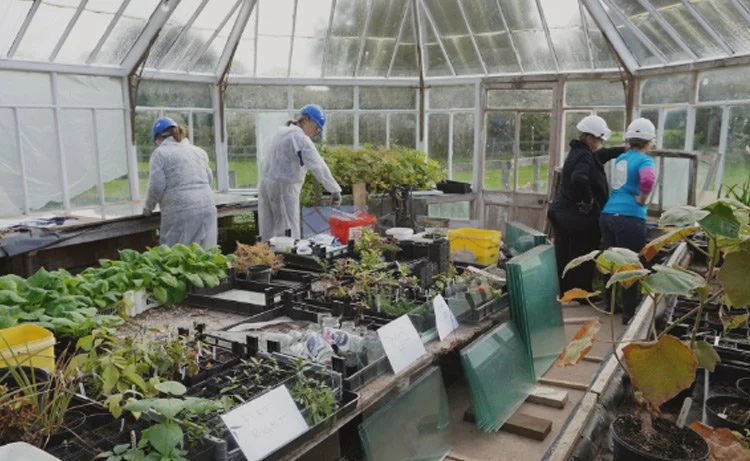
Seedlings among glazing
Vision
Jammers with first panes installed
Fun and Feedback
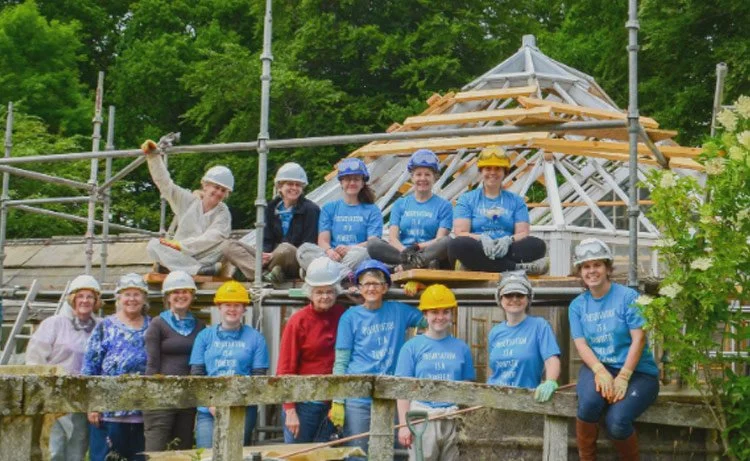
Burgie group
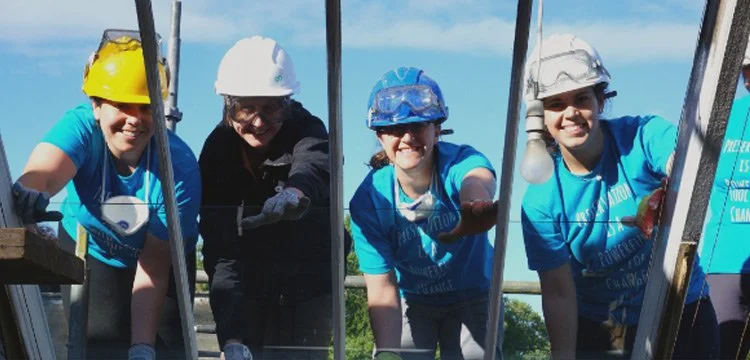
Even though we worked hard, fun was an essential element both while working and during our time off. We had a remarkable two-day tour of the mystical Isle of Skye. Excursions nearer the Burgie estate included a tour of Johnstons of Elgin, a cashmere mill established in 1797; sheepdog trials viewed from a blustery hillside; walks along the firth at Findhorn, and more.
One Jammer stated:
The trip to Skye far exceeded my expectations. It was one unexpected delight after another. I really can’t say enough good things about this trip! The project itself was very meaningful and really felt like we were doing important work. Being able to hear Hamish’s passion gave real life to the project.
Volunteer feelings:
The glass house looks amazing- it’s so nice when a project comes together! I am so proud to have played a small part in it! Thank you, Steffi for your guidance and patience as Project Coordinator. May the Burgie Green House stand another 100 years!
Hamish Lochore, owner, said:
The glassed-in greenhouse has been a Godsend with all this year’s seed trayed up and ready to germinate in the spring!!!